
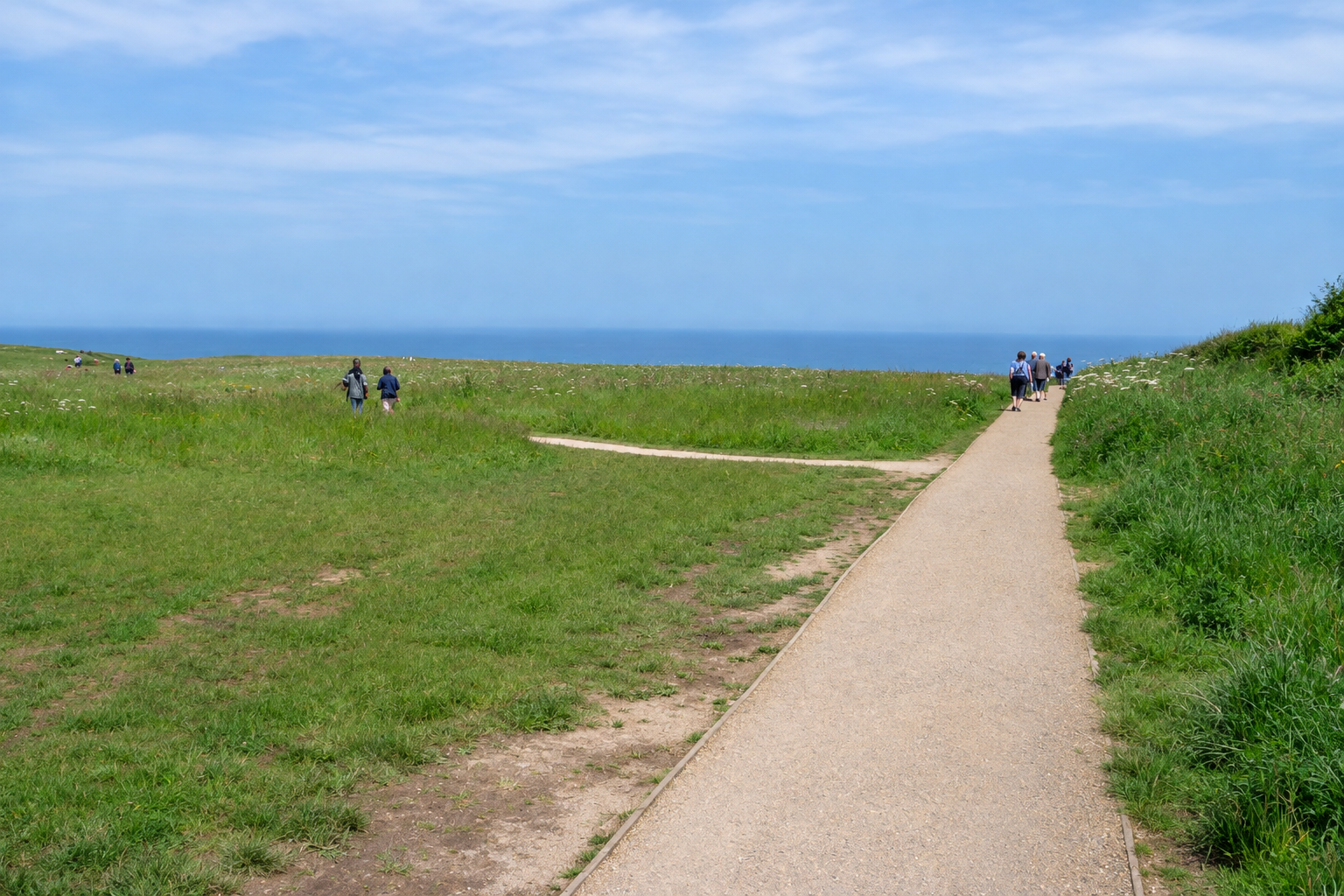
Chalk cliffs north of Flamborough, packed with auks and gannets, watched from a fenced path rather than a boat.
Bempton is the easiest serious seabird cliff in England. North of Flamborough, a clifftop path runs above colonies of puffins, razorbills, guillemots and gannets. You watch from a fenced viewpoint, not from a boat and not from the edge.
The chalk is real. People lean out for a photograph and the fence is there because the drop does not care about a picture. Stay on the path, keep dogs controlled, and start at the visitor centre rather than at a lay-by you liked the look of.
A scope helps on the further stacks. The nearer rails work with binoculars. Wind off the sea pins the birds to the ledges and makes the commuting flights easier to follow.
What the months actually hold
| April | Puffins return to the ledges. The cliffs are already busy with auks. Do not expect the June crowds, or the June numbers. |
|---|---|
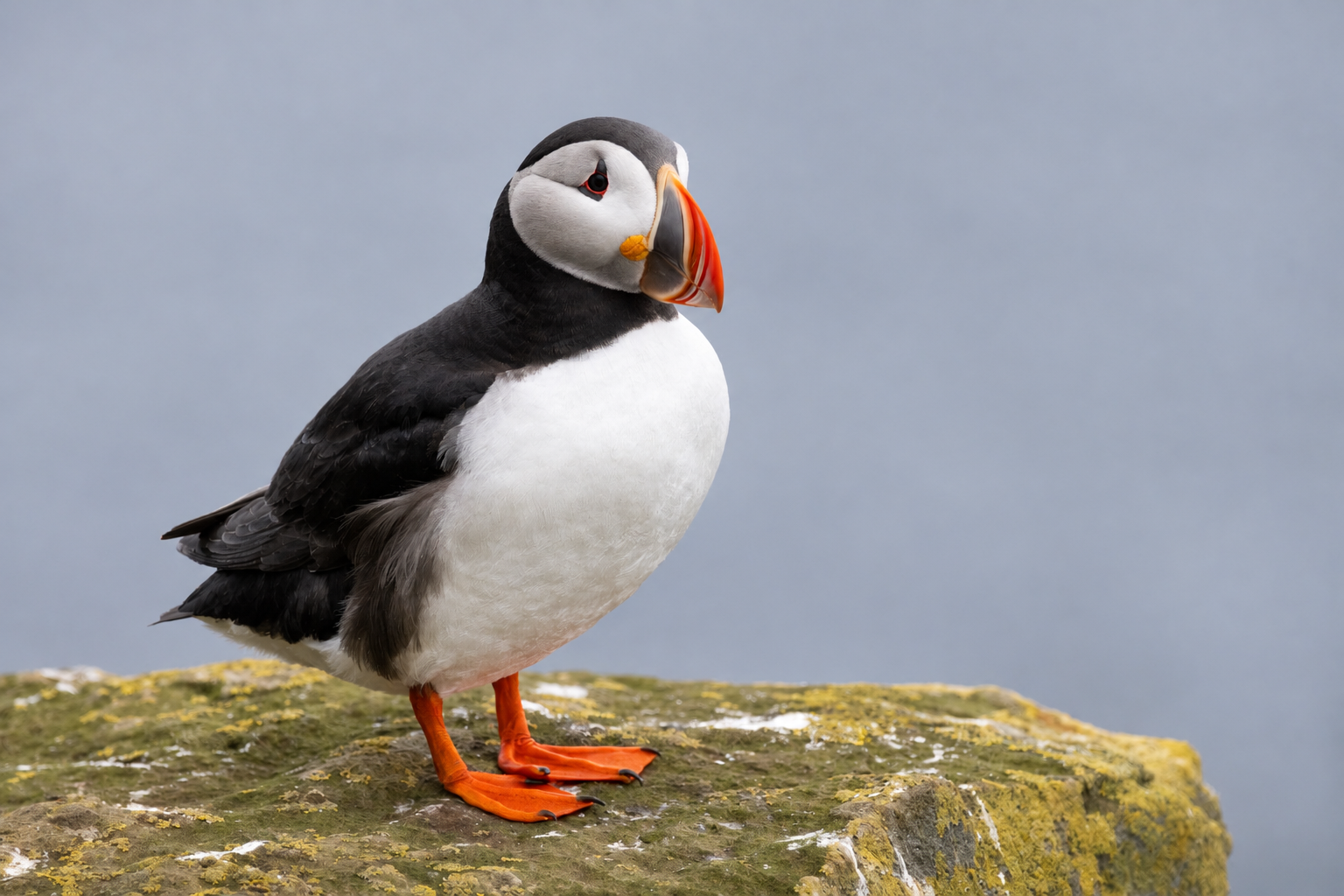
| May and June | The puffin month. Birds in with sand eels, birds out low over the water. This is the visit if the puffin is the reason. |
| July | Puffins thin out. Gannets are still on the chalk, and the path is still worth the day. |
| The rest of the year | Gannets hold a longer season than the auks. A winter cliff is a different bird and a harder wind. It is not a failed puffin day. |
How to stand on the path
Arrive early if you want the path to yourself. The viewpoints fill from mid-morning on a fine weekend. The first rails from the centre are the closest birds.
You are above the colony, not in it. Burrows in the turf are not a shortcut. A calm morning shows the flights. A gale shows you the ledges and very little else.
From the visitor centre, not from a lay-by
Start at the visitor centre and take the first rails. They hold the closest birds. A scope helps on the further stacks. The nearer fences work with binoculars. Wind off the sea pins auks to the ledges and makes the commuting flights easier to follow. A gale shows you the chalk and very little else. A calm morning shows the flights, which is the better spectacle.
The chalk is real. People lean out for a photograph, and the fence is there because the drop does not care about a picture. Stay on the path. Keep a dog controlled. Burrows in the turf are not a shortcut to a better angle. You are above the colony, not in it. Arrive early if you want the path to yourself. Viewpoints fill from mid-morning on a fine weekend, and the person who arrives at noon photographs other people's heads.
Which month you actually mean
April is the return. Puffins are back on the ledges and the cliffs are already busy with auks, without the June crowds or the June numbers. May and June are the puffin month: birds in with sand eels, birds out low over the water. If the puffin is the reason, this is the visit. July thins the puffins. Gannets are still on the chalk and the path is still a day. The rest of the year is a gannet cliff and a harder wind. It is not a failed puffin day, and the page will not dress it up as one.
Bempton is the easiest serious seabird cliff in England because you watch from a fence, not from a boat and not from the edge. The Farnes and Skomer are different tickets. If you want to stand in a colony, book one of those and accept the swell. If you want a path and a visitor centre, stay here and pick May or June.