Each animal has its own page: the marks, the months it is actually present, and the ground where this guide will send you. Some of those grounds are parks. A Scottish wildcat page that sends you to a lay-by would be a fairy tale.
Start with the animal if you already know what you hope to see. The photograph is the face. The places named under it are where that face is written up.
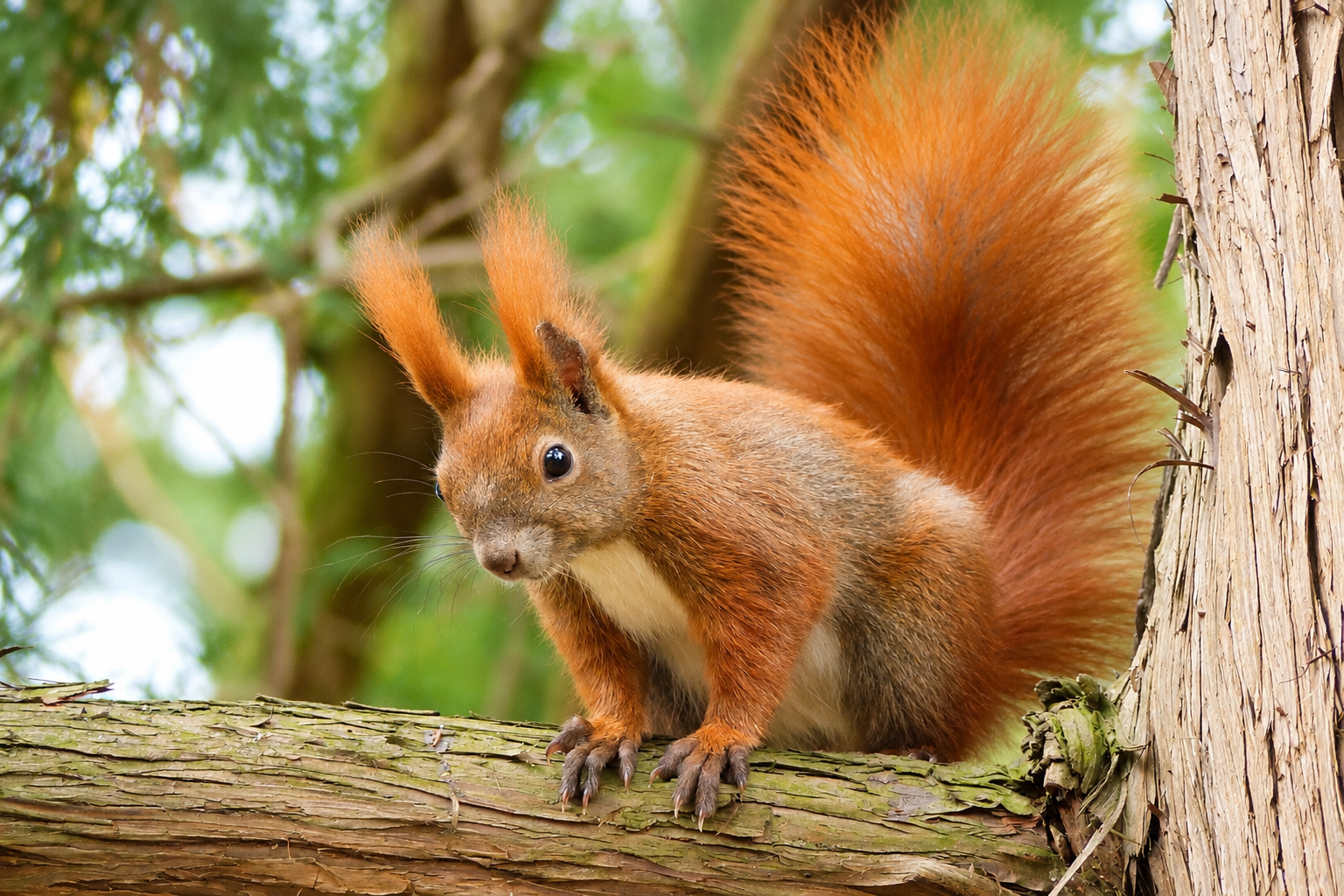
Sciurus vulgaris
The red squirrel is still the squirrel of the Highlands, of parts of Wales, of Brownsea, and of a few English coastal woods, Formby among them. Ear tufts in winter, a smaller frame than the grey, and a habit of freezing on the far side of a trunk.
Grey squirrels carry the squirrelpox that empties a red wood. Where reds remain, the watching rule is simple: do not feed them with picnic scraps, and do not treat a habituated animal on a path as a pet. Dawn in a pine stand is the reliable hour.
The full day is written at Formby, Cairngorms, British Wildlife Centre.
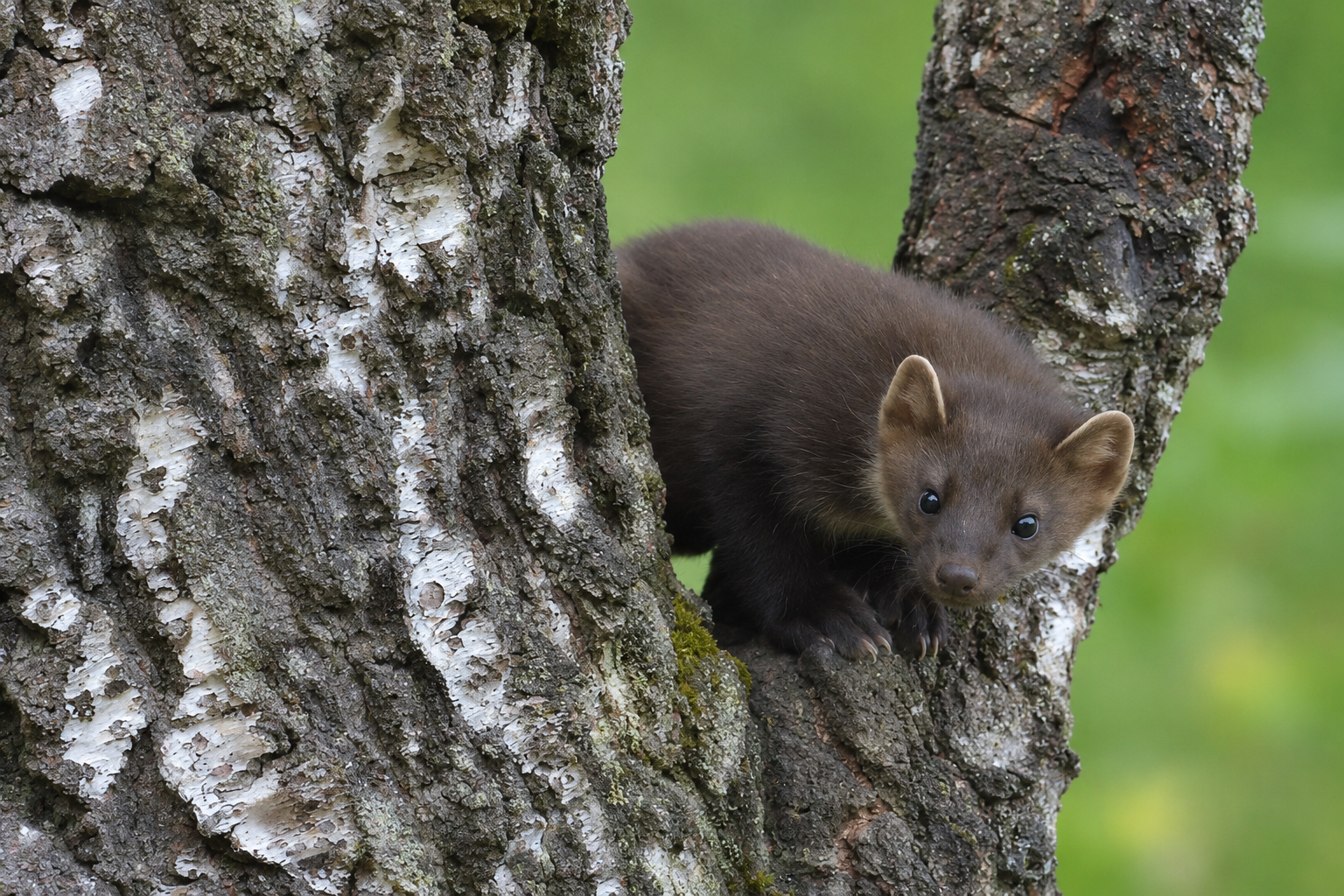
Martes martes
A pine marten is a cat-sized mustelid with a cream bib and a long tail. It has come back through the Scottish Highlands and, more slowly, into parts of Wales and northern England. Most sightings last a few seconds at a forest edge.
Dusk is the hour. A hide run by a reserve beats a random lay-by. Do not bait a garden if you are inside a capercaillie wood: martens take eggs, and the woods that still hold both animals are not the place for an experiment.
The full day is written at Cairngorms, British Wildlife Centre.
Felis silvestris
The Scottish wildcat is the rarest cat this guide will mention, and the honest place to see an animal of that breeding line is Highland Wildlife Park, not a lay-by in the Cairngorms. Hybridisation with feral domestic cats has left very few animals that still match the old description.
A true wildcat reads as a thick-tailed, heavily striped tabby with a blunt tail tip and no white paws. A photograph of a 'wildcat' on a garden wall is almost always a tabby.
The full day is written at Highland Wildlife Park.
Muscardinus avellanarius
The hazel dormouse is a small, orange-brown mouse of coppice and thick hedge. It is nocturnal, it hibernates, and a casual walk will not show you one. Southern England still has the strongest woods.
Licensed box checks are how most people meet them. A public event run by a reserve is the right door. Shining a torch through a hedge at midnight is not.
The full day is written at Knepp.
Tetrao urogallus
The capercaillie is a huge forest grouse of the Caledonian pine, and it is in serious trouble. Lekking males in spring are famous and easily wrecked by an audience. This guide will not send you to a lek.
If you walk a signed path in a Speyside wood and a dark grouse the size of a turkey bursts from the heather, you have had your sighting. Leave it there. Do not follow.
The full day is written at Cairngorms.
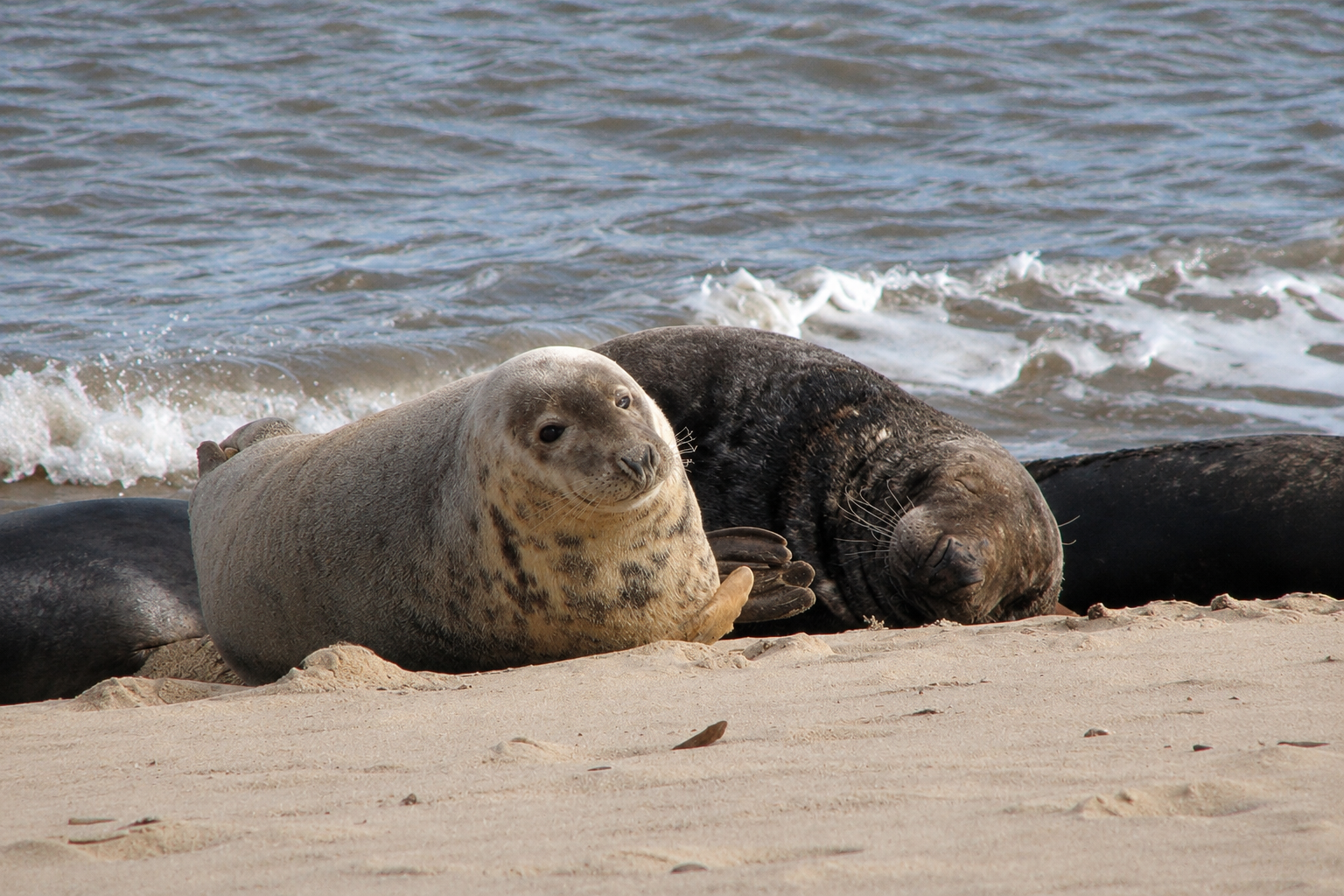
Halichoerus grypus
Britain holds a large share of the world's grey seals. The animals haul out all year, and the pupping season, autumn into midwinter, is when the beaches at Donna Nook and the rocks of the Farnes become nurseries.
White pups stay put. The cows are not tame because they do not run. A fence, a boat, or a dune ridge is the right distance. If a cow is looking at you and shifting her weight, you are already too close.
The full day is written at Donna Nook, Farne Islands.

Castor fiber
Beavers are back in British rivers after centuries away: officially on a few rivers, and also in fenced projects and on rewilded ground such as Knepp. The sign is often the work, not the animal. A felled pencil of willow, a dam, a canal through the rushes.
The animal itself is a dusk swimmer. Sit downstream of a known lodge and keep still. A tail-slap means you have already been seen.
The full day is written at Knepp.
Arvicola amphibius
A water vole is rounder than a rat, with a blunt face, small ears and a tail shorter than the body. It plops from a bank and swims with a lot of its back showing. Rat swims are lower and more purposeful.
Slow, vegetated ditches and chalk streams are the habitat. Sit at a bend and listen for the plop. American mink emptied many colonies, and the streams that still hold voles are worth a quiet hour.
The full day is written at British Wildlife Centre.
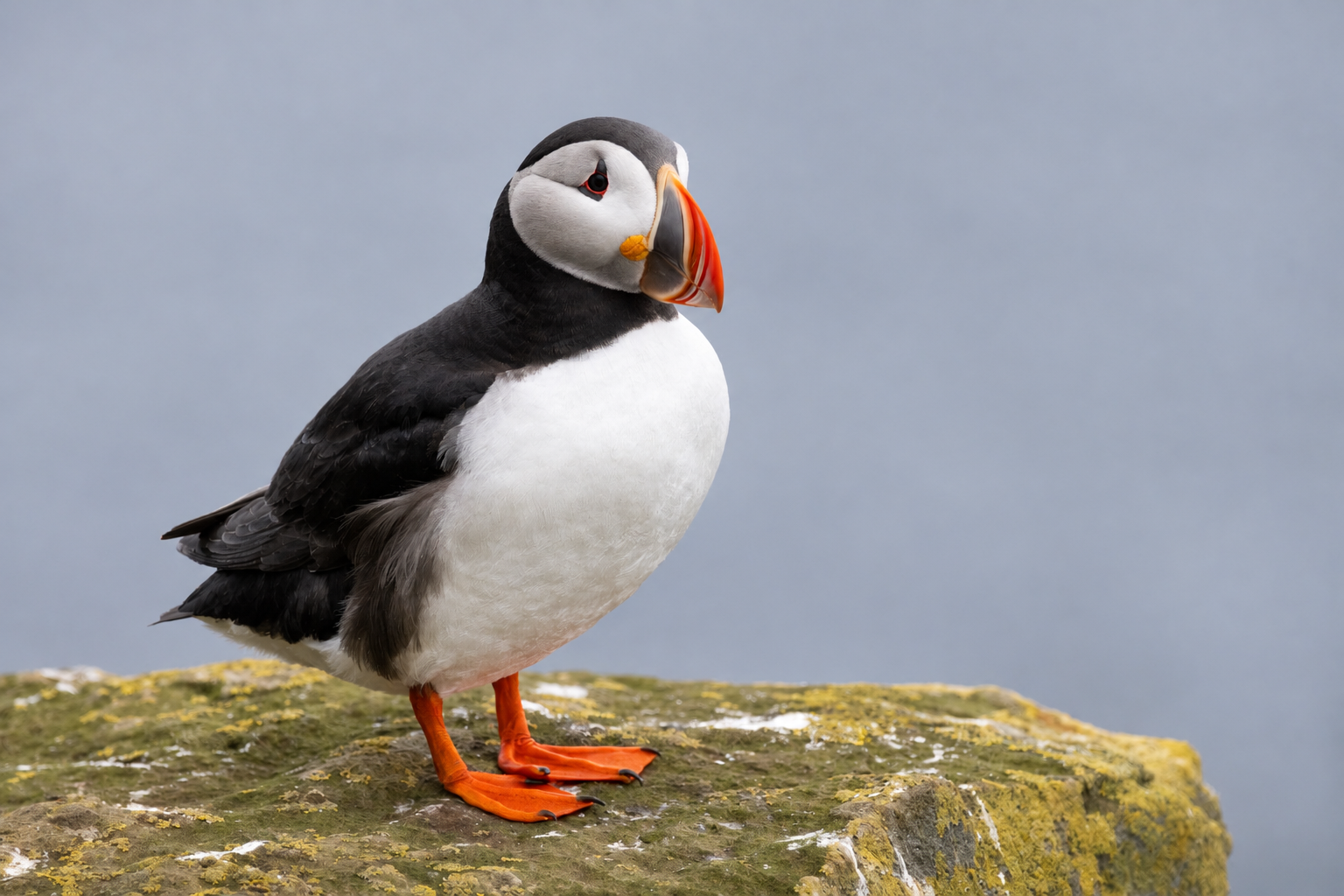
Fratercula arctica
Puffins come ashore to breed and spend the rest of the year at sea. In Britain the season on the cliffs runs roughly from April to July. Bempton, the Farnes and Skomer are the three landings this guide trusts for a first view.
They are smaller than people expect, and they stand their ground on a ledge if you are on the path. Off the path, you are in the colony.
The full day is written at Bempton Cliffs, Farne Islands, Skomer.
Haliaeetus albicilla
The white-tailed eagle is a barn-door bird: broad wings, a pale head with age, a wedge of a tail. Scotland's west coast, Mull above all, is the reliable watch. Reintroduction has also put birds on the Isle of Wight and along the Solent, where a fish-carrying eagle over a harbour is no longer a rumour.
Boats that work the Mull lochs know the territories. A scope from a headland works too, if you have the afternoon.
The full day is written at Isle of Mull.
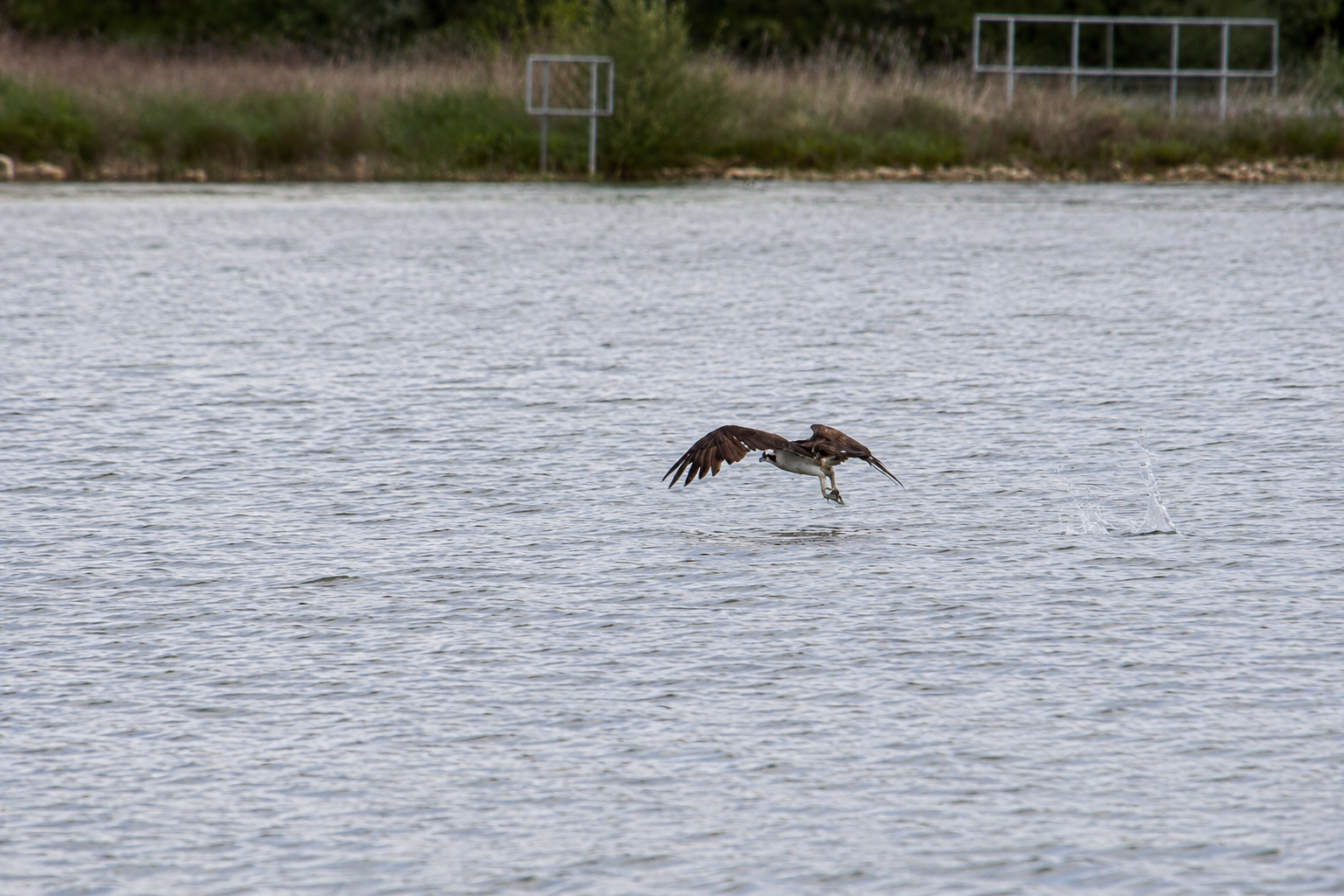
Pandion haliaetus
Ospreys return to British nests from late March and leave again toward September. Rutland Water is the straightforward English watch, with hides pointed at the project. Scotland has the older population, around Loch Garten and many lochs that do not advertise themselves.
The hunt is a hover and a feet-first dive. If you only see a large hawk circling, wait. The dive is the confirmation.
The full day is written at Rutland Water.
Milvus milvus
The red kite is the fork-tailed hawk that now hangs over the M40, the Chilterns, mid-Wales and a growing share of England. The comeback is one of the plain successes in this guide. A bird rocking on a thermal, tail twisting, is usually a kite and not a buzzard.
They are scavengers first. A motorway verge and a field where a farmer has turned the soil both draw them. Do not put meat out in a garden to stage the photograph. The birds are doing well without a feeding station on every lane.
The full day is written at Knepp.