
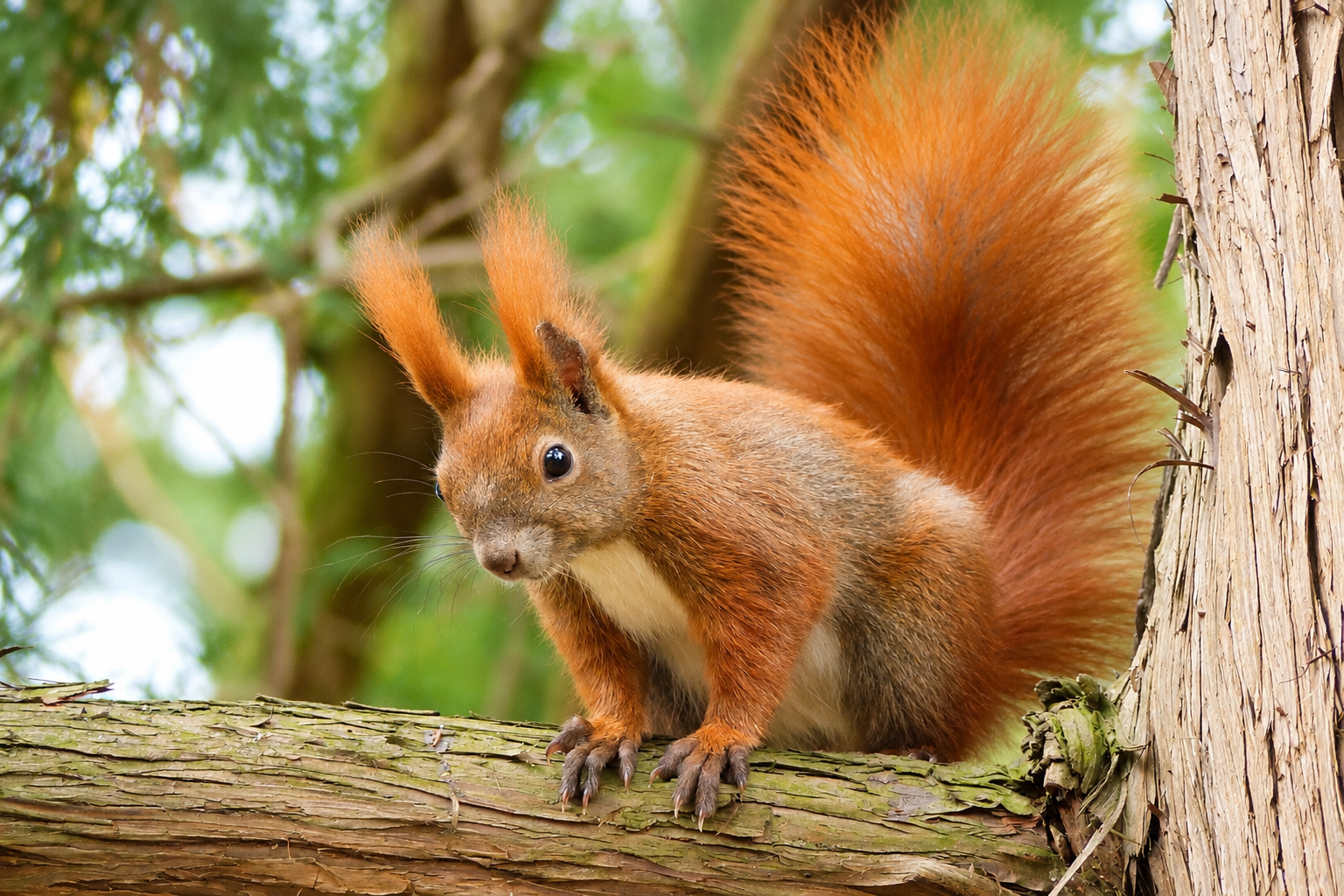
Sciurus vulgaris
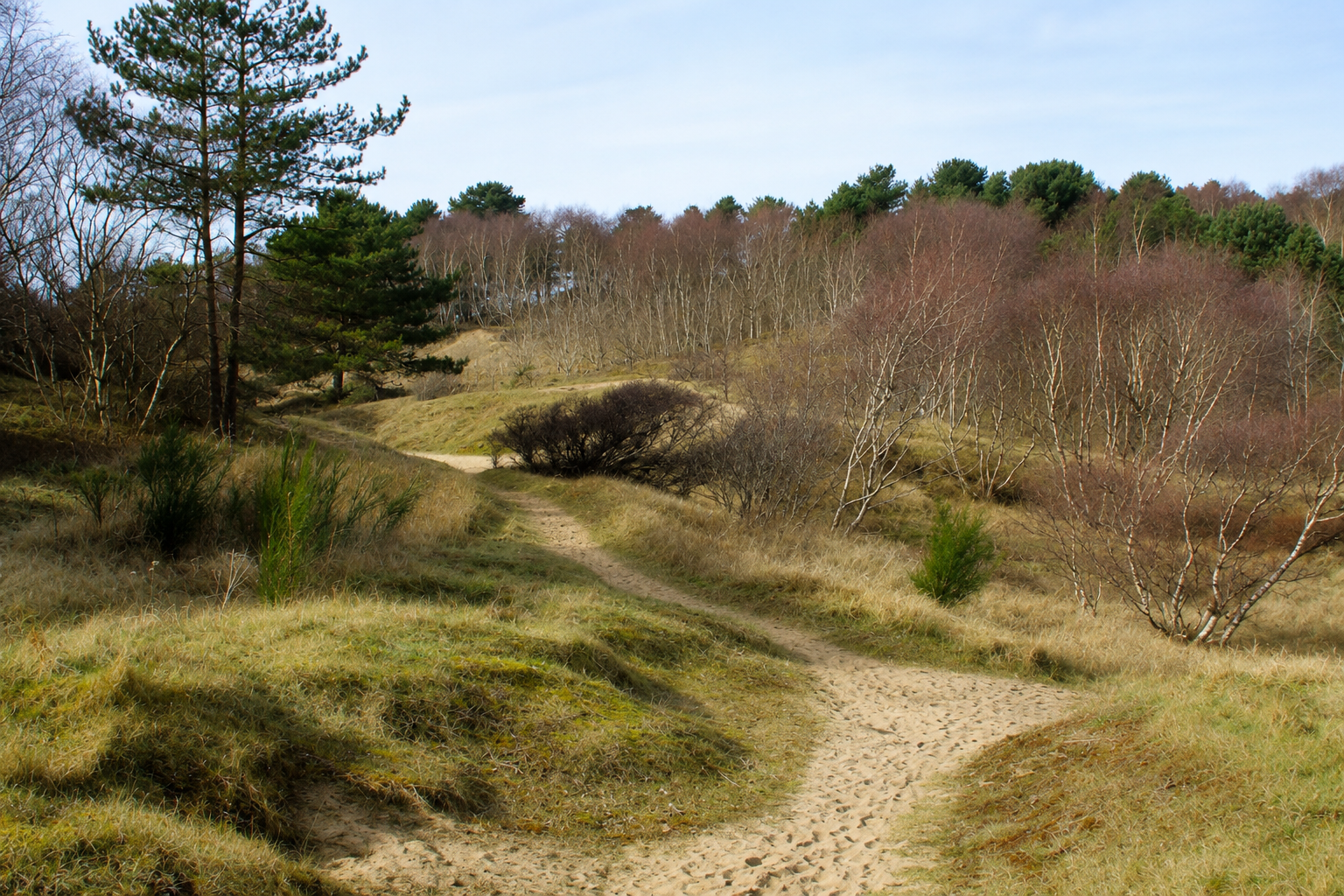
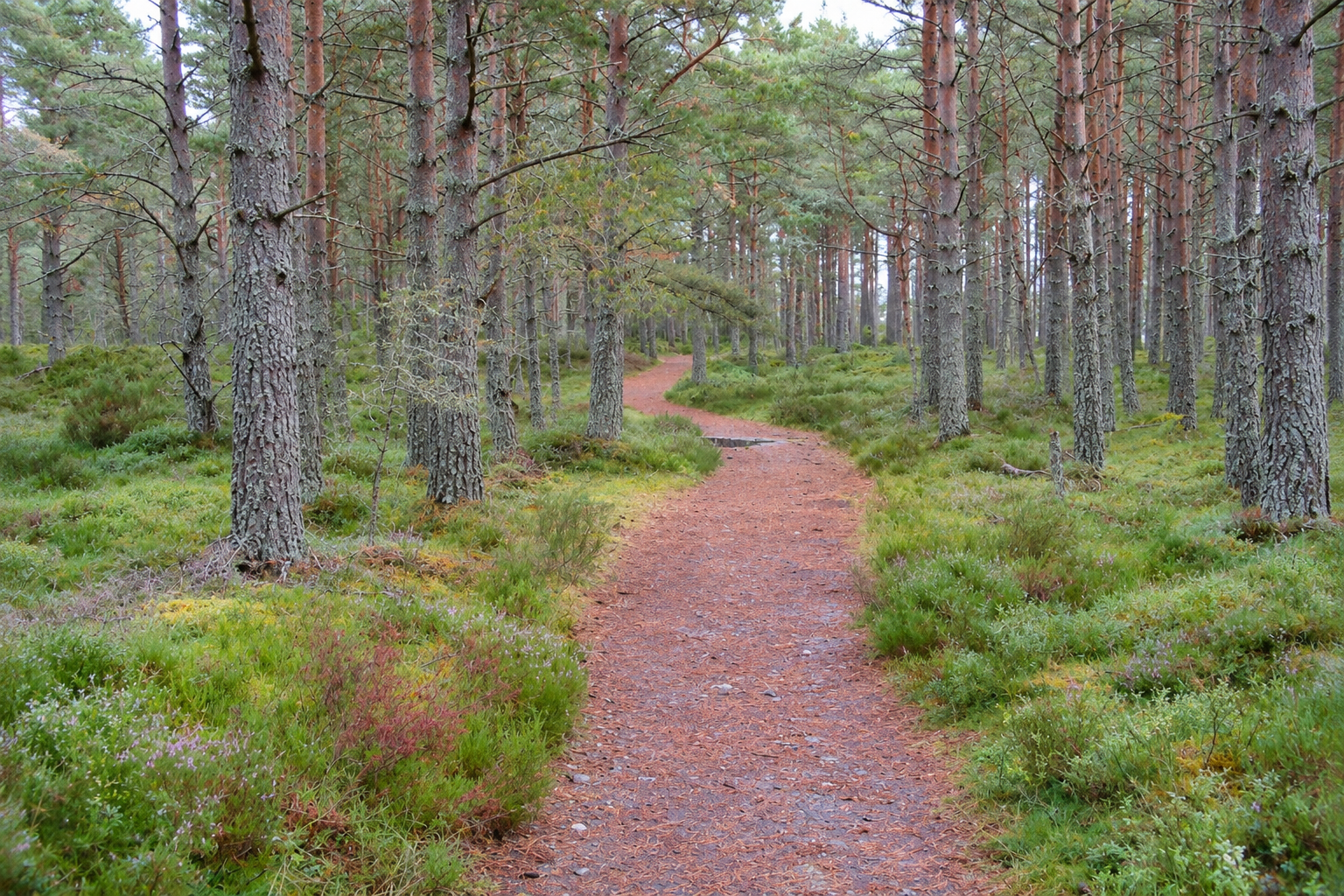
The animal in the hand of the eye
Ear tufts in winter, a smaller frame than the grey, and a habit of freezing on the far side of a trunk. That is the red squirrel this guide means: Sciurus vulgaris, still the squirrel of the Highlands, of parts of Wales, of Brownsea, and of a few English coastal woods.
The grey is larger, blunter in the ear, and at home in towns. People who have only seen greys often call the first red a 'small grey' for half a second. The tufts and the colour of the tail correct it.
Why the woods empty
Grey squirrels carry squirrelpox that reds do not survive. Where reds remain, the watching rule is simple: do not feed them, and do not treat a habituated animal on a path as a pet. Picnic scraps are how a wood gets a crowd and a disease.
Dawn is the reliable hour, in pine, before the car park. Cones already chewed on the ground are the sign you are in the right stand.
Where this guide sends you
Formby fixes the shape, on the Sefton coast, in a wood small enough to learn in a morning. The British Wildlife Centre at Lingfield does the same at talking distance, which is a classroom and not the wild animal. The Cairngorms are where the squirrel goes back to being wary, and where the next shape on the trunk may be a marten.
Brownsea and parts of Wales are real red squirrel country too. This guide's pages are the ones with a way to stand written down. Start with one of them.
Dawn, cones, and the path you do not walk
The reliable hour is dawn, in pine, before the car park. Cones already chewed on the ground are the sign you are in the right stand. Stand off the path and let people pass. The squirrel crosses behind walkers, not in front of a lens pointed at it. Ten minutes of not moving beats a circuit. A circuit startles the wood and returns you to the car with a step count and a story about dogs.
Ear tufts in winter make the animal easier to name. People who have only seen greys often call the first red a small grey for half a second. The tufts and the colour of the tail correct it. The grey is larger, blunter in the ear, and at home in towns. Learning that difference once, properly, saves a year of hopeful misnaming in the wrong wood.
Formby, Lingfield, then a wary wood
Formby, on the Sefton coast, fixes the shape in a wood small enough to learn in a morning. The British Wildlife Centre at Lingfield does the same at talking distance, which is a classroom and not the wild animal. The Cairngorms are where the squirrel goes back to being wary, and where the next shape on the trunk may be a pine marten. Brownsea and parts of Wales are real red squirrel country too. The pages in this guide are the ones with a way to stand written down.
Grey squirrels carry squirrelpox that reds do not survive. Where reds remain, do not feed them, and do not treat a habituated animal on a path as a pet. Picnic scraps are how a wood gets a crowd and a disease. The nut in the pocket is the habit to leave behind, including at Formby, where the animal is calm enough that the habit feels harmless.