
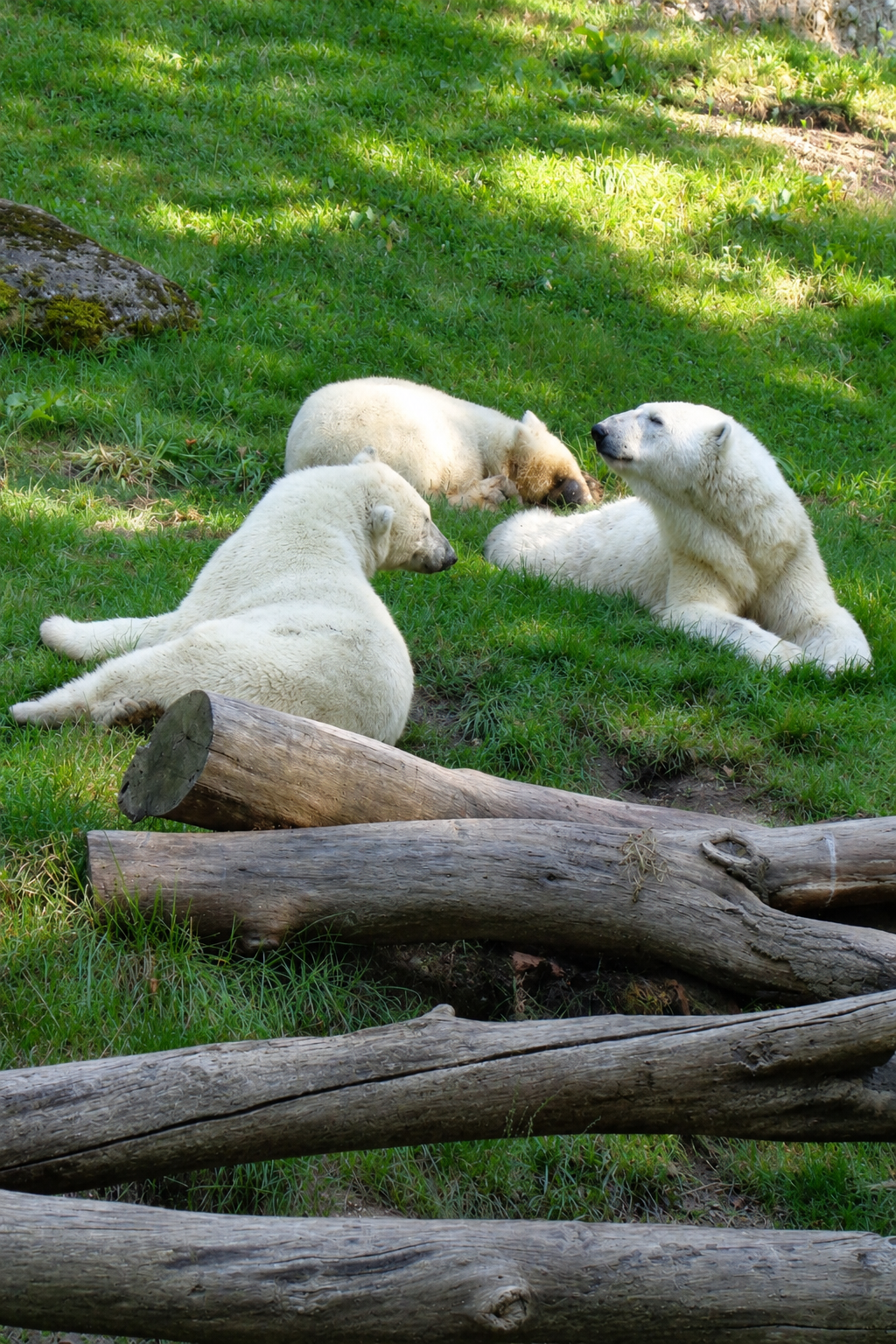
The wide grass reserves at Branton are where this guide sends anyone who wants a rare animal in front of them, not a speck on a cliff.
Yorkshire Wildlife Park sits on open ground at Branton, outside Doncaster. The walk is long because the reserves are long. Polar bears have grass measured in acres, Amur leopards keep to a wooded edge, and African painted dogs move as a pack rather than as one animal posed in a pen.
It belongs on a British wildlife map for a plain reason. Several of the species here are part of coordinated breeding work, and a day in the park is how many people in the north of England first learn to watch an animal for more than a minute. The park publishes its own times and tickets at yorkshirewildlifepark.com. This page is the shape of the day, not the gate.
Give it a full day. School-holiday Saturdays fill the car park. Winter mornings are the quiet hour at the polar bear reserve, and the light is still flat enough that a pale animal on green grass is readable.
Order through the grounds
| Polar bears | Go here first. The reserve is the longest walk and the one worth the morning. Stay on the path. The size of the grass is the point: the bear is not brought to the rail. |
|---|---|
| Amur leopards | The wooded edge, after the bears. Ten still minutes beat a glance. The cats use the back of the cover, and a moving crowd along the rail empties the view. |
| Painted dogs | Watch the pack, not a single face. They travel as a group. If one animal is lying up, wait for the others to decide the direction. |
| The rest of the loop | Paths are pushchair-friendly for most of the circuit. Food is on site. Do not try to compress the park into an hour between other plans. |
Why a park is in a field guide
A polar bear, an Amur leopard and a painted dog are not animals you meet on a Yorkshire footpath. Pretending otherwise helps no one. Branton is the honest place in this part of the country to learn how those animals occupy space.
The desk in York can say whether a month suits a first visit. Opening hours change. The park's own site is the one that knows the day.
A full day at Branton, walked in order
Arrive before the main gate queue if you can. The polar bear reserve is the long walk and it is the first thing worth your eyes. The grass is the exhibit. A bear crossing that ground at a distance is the picture the park is built to give you, and it is a worse picture if you have already spent the morning in the cafe and reached the reserve when the light has gone hard. Stay on the path. The size of the enclosure is the lesson, and a person who walks the rail looking for a close portrait misses it.
Amur leopards come second, at the wooded edge. Give them ten still minutes. The cats use the back of the cover, and a crowd that keeps moving along the rail empties the view just as you arrive. Painted dogs are a pack, not a face. If one animal is lying up, wait until the others decide a direction. Ticking them off a board on the way to the exit is how a long park becomes a car park.
The rest of the circuit is real walking. Most of it takes a pushchair. Food is on the site, which matters because a day that starts at the bears and tries to finish before lunch is the day that skips the dogs. School-holiday Saturdays fill the car park. A winter morning does not, and the pale animal on green grass is easier to read when the light is still flat.
What belongs on this page, and what belongs to the park
This page is the shape of the day. Opening hours, ticket prices and which reserve is closed for work live on yorkshirewildlifepark.com, because the park knows its own morning and a guide written in York does not. If a month is awkward, write to the desk before you book the drive from York. The answer will be about light and crowds, not a substitute for the gate.
Polar bears, Amur leopards and painted dogs are not animals of a Yorkshire footpath. The page says so on purpose. Branton is in this guide because it is the honest place in this part of the country to watch those animals occupy space, and because the breeding work they are part of is a piece of the same story as a red squirrel wood or a seal beach. A field guide that only lists what you might meet on a public path is a thinner book.
Times and tickets: yorkshirewildlifepark.com.